Beyond Color
Beyond Color: How Advanced Pigment Dispersion Is Redefining Modern Plastics Manufacturing
In the plastics industry, color is far more than an aesthetic choice, it is a critical engineering requirement. Whether you are molding a sleek automotive fascia, thermoforming a food-safe packaging tray, or producing durable housing for office equipment, achieving consistent, high-performance color is central to product quality and brand integrity.
Yet, any experienced polymer compounder or injection molder knows that bringing color into a resin matrix comes with technical trade-offs. Poor pigment dispersion can lead to streaks, specks, weakened mechanical properties, processing instabilities, and costly scrap rates.
To overcome these challenges, manufacturers increasingly look toward advanced colorant technology. A standout leader in this domain is LioChem (a member of the global artience group), whose Conyers, Georgia facility has established a benchmark in precision color engineering.
Here is a closer look at what makes modern plastic colorant technology work, and why LioChem’s approach to dispersion technology is changing the game for converters and molders alike.
The Science of “Super Dispersion”: Why Particle Distribution Matters
At its core, a plastic colorant, whether provided as a masterbatch concentrate, a compounded precolor, or a dry pigment dispersion, relies on distributing solid pigment particles uniformly throughout a molten polymer resin.
If pigments agglomerate (clump together), the consequences are immediate:
- Visual defects: Micro-specks, surface swirl, or batch-to-batch shade variations.
- Structural weaknesses: Undispersed pigment agglomerates function as stress concentrators, degrading impact resistance, and tensile strength.
- Operational inefficiency: Higher pigment usage is required to achieve target opacity, driving up unit costs.
LioChem addresses this fundamental challenge through its proprietary Super Dispersion Technology. Rooted in advanced pigment chemistry and refined through U.S. manufacturing precision, this process breaks pigment agglomerates down to optimal particle sizes and encapsulates them efficiently.
For the processor, Super Dispersion delivers tangible operational advantages:
- Higher Pigment Loadings: Concentrates can hold greater pigment density without sacrificing processability.
- Lower Usage Rates: Higher pigment loading and superior dispersion mean molders can use lower letdown ratios (LDRs) while achieving full opacity and color strength.
- Lot-to-Lot and Part-to-Part Consistency: Minimal shade deviation across production runs ensures identical color matching between separate components.
- Enhanced Processing Stability: Reduced filter pressure buildup during extrusion and smoother flow dynamics during injection molding.
Matching Colorants to High-Spec Applications
Different end markets demand vastly different physical, chemical, and regulatory profiles. LioChem’s colorant portfolio is specifically tailored across key performance-driven industries:
1. Automotive Interiors & Exteriors
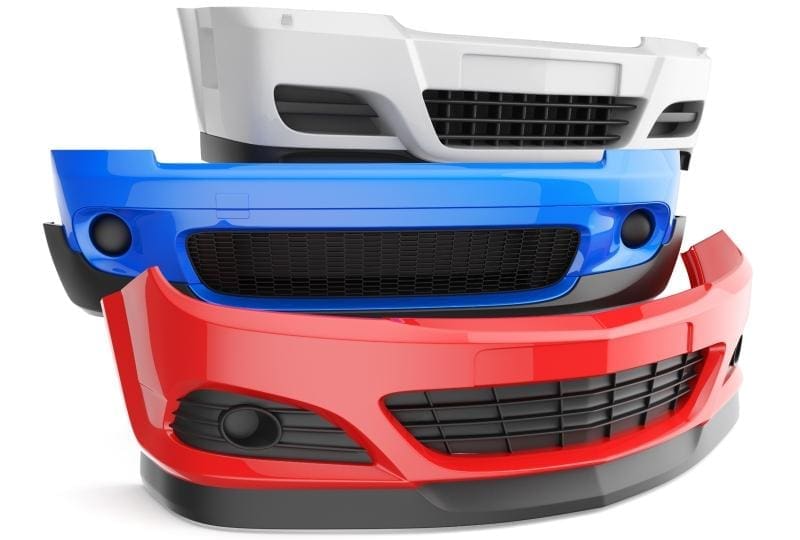
Automotive parts, such as instrument panels, center consoles, bumpers, and exterior trim, demand exceptional UV stability and weatherability to withstand harsh environmental exposure without fading, chalking, or compromising structural integrity. Manufacturing under IATF 16949 and ISO 9001:2015 quality certification standards, LioChem formulates color concentrates that deliver long-term durability and visual consistency across all components.
2. Packaging (Food, Beverage, & Medical)
In food, beverage, and medical applications, colorants must meet strict regulatory thresholds while maintaining overall part clarity and performance. LioChem offers formulations compliant with key global regulatory standards:
- FDA and EU 10/2011 (as amended): Compliant for indirect food contact applications.
- TSCA Section 8(a)(7) & EU REACH PFAS Restrictions: Engineered as PFAS-free products.
- REACH Regulations (EC) 1907/2006: Formulated as SVHC-free (Substances of Very High Concern) products.
- CONEG, 94/62/EC, and TPCH: Fully compliant with heavy metal restriction guidelines.
3. Industrial & Consumer Goods
From computer casings and office copiers to lawn mowers and golf balls, consumer products require scratch resistance, chemical resistance, and vibrant brand colors that endure heavy everyday wear and tear.
Flexible Product Formulations
Not all production lines are built the same, which is why colorant delivery formats must match specific processing equipment and resin systems. LioChem’s lineup includes:
- Masterbatch Pellets (LEM, LPM, LNM, LBM, and LCM Series): Standard and custom-tailored color concentrates delivered in pellet form for easy dosing, low dust, and rapid blending with neat resin. Available in a variety of carrier systems for compatibility with a wide range of polymers.
- Pigment Powder Dispersions (LWF and ASP Series): High-efficiency dry dispersions designed for specialty compounding and custom dry-blending applications.
- Colored Compounds and Blends: Turnkey pre-compounded pellets or salt-and-pepper blends that incorporate custom color directly into a natural resin of your choice without requiring on-site letdown or color mixing.
The Bottom Line: Total Cost of Quality
In polymer processing, the purchase price of a masterbatch is only one part of the financial equation. True cost efficiency is measured by process uptime, scrap reduction, energy savings, and rapid ramp-up times during color transitions.
By leveraging LioChem’s Super Dispersion technology and tapping into the global R&D strength of the artience group, plastics processors gain a technical partner capable of accelerating color matching, ensuring regulatory compliance, and delivering bulletproof lot-to-lot reliability. In a competitive market, precision color is not just an additive, it is a competitive advantage.
In a competitive market, precision color is not just an additive, it is a competitive advantage.