Functional Dispersions


LIOACCUM: CNT dispersion for lithium-ion battery cathode
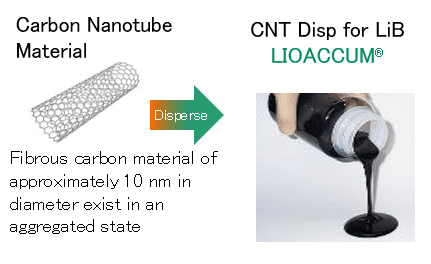
LIOACCUM™, a conductive CNT dispersion for lithium-ion battery cathode materials developed by our company in addition to extending the cruising range of EVs by using its proprietary dispersion technology to enable stable CNT dispersion and increase the capacity of lithium-ion batteries, we will solve the problems faced by lithium-ion batteries such as battery safety, miniaturization, charging speed, and durability.
We are highly regarded for our high technological capabilities and the only CNT dispersion manufacturer with a four-pole, five-base production system capable of stable procurement, production, and supply in the major automotive markets of North America, Europe, China, and Japan.
Features
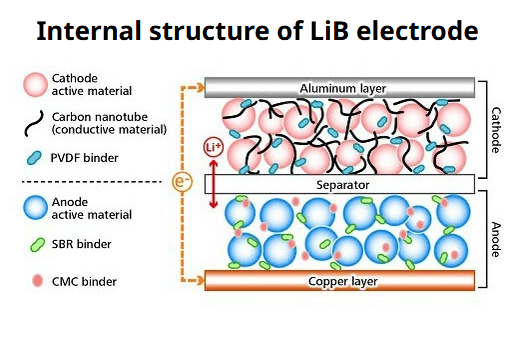
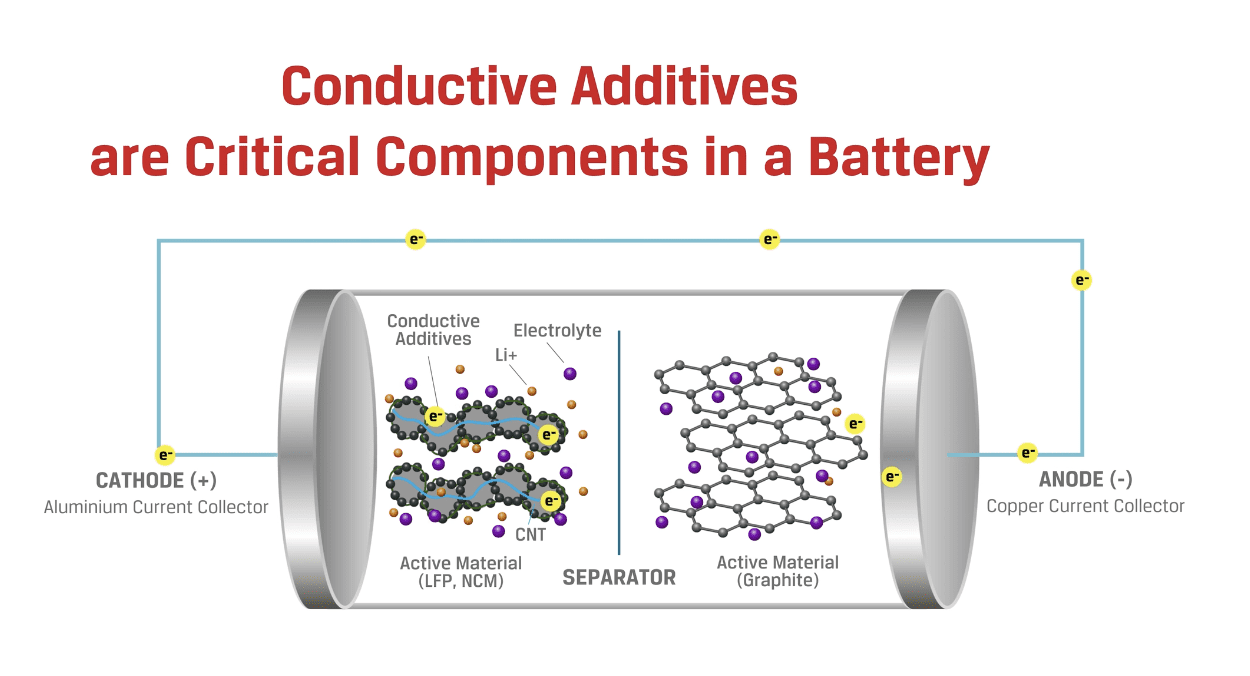
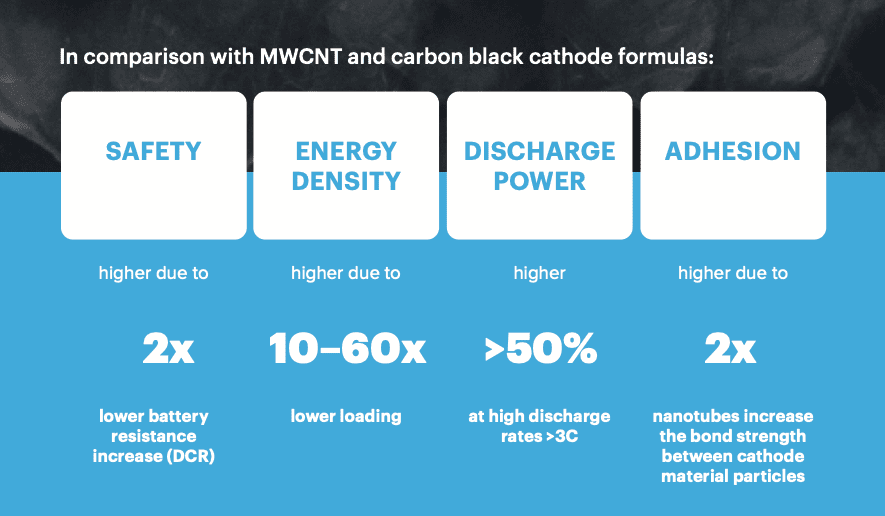
The positive electrode material of lithium-ion batteries mainly consists of an active material, a conductive additive, and a binder. By using CNT (carbon nanotubes) instead of carbon black as a conductive agent, it is possible to demonstrate conductive performance with a small amount of conductive agent.
Benefits of using CNTs as conductive aids for lithium-ion batteries
- High capacity: Increasing the capacity of lithium-ion batteries by increasing the amount of active material filled
- High output: High output of lithium-ion batteries due to high conductivity
- Long life: Longer life of lithium-ion batteries through uniform use of active materials
TOYOCOLOR has developed high-performance CNTs in collaboration with CNT manufacturers, and has also dramatically improved the dispersibility and conductivity of CNTs using proprietary additives and dispersions manufacturing methods. We succeeded in significantly lowering the resistance value of the positive electrode of ion batteries. This reduces the cost of conductive materials in lithium-ion batteries, and by making it possible to increase the amount of active material in the positive electrode, it increases battery capacity, extending the cruising range of EVs and improving quick charging performance. To do.